
Every e-commerce platform ships with dashboards, and every operator we’ve worked with eventually hits the same wall with them. Seller Central will tell you yesterday’s ordered product sales. Shopify will chart your conversion rate. Your ad consoles will each claim credit for the same order. What none of them will tell you is the question you actually run the business on: after fees, ad spend, shipping, and returns, which products on which channels made money last month, and is that number moving?
Answering that question is engineering work, and it has a name: analytics engineering. We come at it from an unusual angle. Ecliptic Ideas owns InsightLeap, an Amazon e-commerce analytics platform used by brands and sales agencies, and our founder is the CTO of Wine Spies, an online wine retailer we’ve partnered with since 2016. We build this kind of pipeline as a product and we consume it as operators, which has given us strong opinions about what matters.
Why the dashboards aren’t enough
The platform dashboards fail operators in three specific, structural ways.
Each one only sees its own channel. Amazon reports Amazon. Shopify reports Shopify. If you sell on both, plus a wholesale channel, there is no page anywhere that shows the whole business. Someone ends up pasting numbers into a spreadsheet every Monday, and that spreadsheet quietly becomes the company’s real analytics system, complete with formula typos and a single owner who can never take vacation.
They report revenue, and revenue flatters everyone. Fees are itemized somewhere else, shipping lives in another report, ad spend is in a different console entirely, and returns show up on their own lag. A SKU can headline a great sales month while losing money on every unit, and the standard dashboards will never surface it, because no single one of them holds all the components of margin.
The definitions don’t match. Amazon’s “ordered revenue,” Shopify’s “total sales,” and your accountant’s “net revenue” are three different numbers. When the Tuesday meeting starts with ten minutes of arguing about whose number is right, the analytics have already failed.
What analytics engineering actually involves
The work is unglamorous and very much software engineering rather than data science:
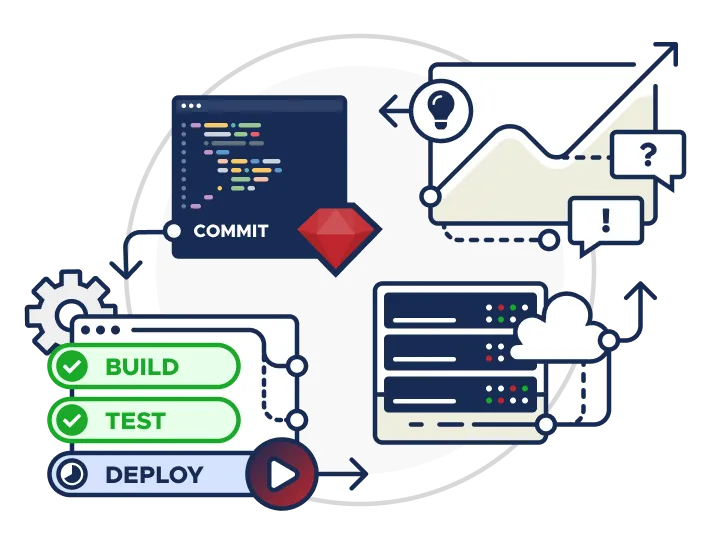
- Extraction. Pulling raw data on a schedule from each channel’s API: Amazon’s SP-API, Shopify, the ad platforms, your 3PL. This is the part people underestimate. SP-API in particular has report types with different latencies, rate limits that punish naive polling, and data that revises itself after the fact. Operating InsightLeap taught us that the extraction layer is where most home-grown attempts die, when the scripts nobody owns start failing silently.
- Modeling. Turning raw feeds into tables that match how the business thinks: orders, units, fees, ad spend, and returns joined per SKU per channel per day, with every metric defined once. This is where “contribution margin” stops being a debate and becomes a column.
- Serving. Putting the modeled data where decisions happen: a warehouse the team can query, dashboards that answer the standing questions, and alerts for the conditions that need a human today (a listing suppressed, margin on a hero SKU dipping below threshold, ad spend spiking without matching sales).
The order matters. Teams that start by buying a dashboard tool discover it’s a projector with nothing to project; the modeling layer is the product.
What changes when it works
The concrete payoff, in the businesses we’ve seen up close, is that a class of expensive guesswork disappears. Reorder decisions stop being made on gut feel against a stockout. Ad budget moves toward the SKUs where marginal spend still returns margin, rather than the ones with the prettiest revenue chart. Unprofitable products get discontinued on evidence instead of after two more quarters of hope. And the Monday spreadsheet ritual, along with the arguments about whose number is right, just ends.
Our longest client relationship is heading into its tenth year; the case study is on the site.
Build, buy, or both
An honest decision rule: if your need is Amazon-centric and standard, buy something (we would say that, owning InsightLeap, so discount accordingly, but the economics genuinely favor it). If your business spans channels, has weird margins (compliance-heavy categories, cold chain, bundles), or runs on questions no off-the-shelf tool asks, you need some amount of custom pipeline, and it should be built like production software: version controlled, tested, monitored, and owned. Data plumbing that only one person understands is the same bus-factor problem as any other unowned system, wearing a different costume.
If you’re staring at four dashboards that don’t agree with each other, tell us what you’re trying to learn from them. Scoping the modeling layer for a channel business is a short conversation, and it’s one we’ve had from both sides of the table.